
Talking Points with President Woodford: The Culture of God's Word
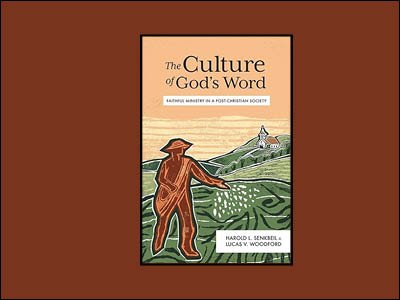
The following is taken from the newly released book of President Woodford and his coauthor, Rev. Dr. Harold Senkbeil.
Today, even gentle advocates of biblical standards sometimes get labeled as bigots or haters. It’s tempting in our hostile social climate to become cultural warriors, trying to put the shattered pieces of Christendom back together again. Some people think if only we could discover how things came off the rails in the first place, maybe we could regain happier and more comfortable days for the people of God.
But it’s a fool’s errand. The tide of cultural disintegration rolls relentlessly on, sweeping up everything and everyone in its path. Besides, the myriad political, social, and philosophical influences that gave rise to this situation over the centuries defy accurate analysis and remedy.
Of course, missionaries and evangelists should study political history, ideological trends, and social psychology, but it’s no use scrambling to get ahead of social trends that oppose the faith. There’s a better path. The vitality and growth of Christ’s church is not rooted in the shifting sands of cultural trends but the living and abiding word of God.
The book of Acts provides a blueprint for confident mission in a shifting culture. The story of the growth of the church in that antagonistic setting is the story of the word of God in action. In fact, not once but three times in Acts we find explicit references to the growth of God’s word (6:7; 12:24; 19:20). The power for the growth of the kingdom is in the word itself. Jesus taught in the parable of the sower, “The seed is the word of God” (Luke 8:11). Despite the setting or context, concerted opposition or determined enemies, the power for the growth of the kingdom is never in those who proclaim and teach but in the word they proclaim and teach. The word grows by itself—sometimes with spectacular results and sometimes not. But the word always brings the results God wills (Isa 55:10–11).
Human culture wields extraordinary influence on how people live and work, and of course that needs to be considered in evangelizing the actual world we live in. This is only common sense. Accurate communication of words—especially God’s word—cannot take place apart from it. But addressing cultural context should be in service to the word, not the other way around. The word of God always takes priority over context. In fact, the word creates its own unique and transcendent culture that undergirds, shapes, and directs the mission and life of the holy Christian church on earth until Jesus comes again.
The book of Acts begins with the dramatic story of how the church was birthed in Jerusalem by the Spirit working through the word. The living and abiding word of God bridged sixteen diverse cultures when the apostles spoke the mighty works of God in their own tongues “as the Spirit gave them utterance” (Acts 2:4). All were amazed, though some doubted and mocked, contending the preachers were drunk (2:12). Peter stood up and proclaimed Jesus of Nazareth as both Lord and Christ, put to death for their offenses and raised again for their justification. He invited all to repentance and baptism in the name of Jesus Christ for the forgiveness of their sins and the reception of the Holy Spirit (2:14–40). The seed of the word of God was growing and producing fruit; three thousand souls were baptized and added to the church that glorious Pentecost day (2:41).
But all was not well among the first believers. Soon internal dissension broke out among them over the distribution of support for widows. The twelve apostles gathered the believers together to get at the heart of the matter: “It is not right that we should give up preaching the word of God to serve tables. Therefore, brothers, pick out from among you seven men of good repute, full of the Spirit and of wisdom, whom we will appoint to this duty. But we will devote ourselves to prayer and to the ministry of the word” (Acts 6:2–4). Seven deacons were selected and publicly authorized to attend to secondary matters while the apostles focused on corporate worship (prayer) and preaching and pastoral care (the ministry of the word). They were intent on keeping central the main points in the life of Christ’s church.
Luke documents the striking impact of God’s word on the life and growth of the first Christian congregation: “And the word of God continued to increase, and the number of the disciples multiplied greatly in Jerusalem, and a great many of the priests became obedient to the faith” (Acts 6:7).
Concentrating on the numerical growth of the church to the exclusion of all else has proven less than fruitful in recent generations. The people before us are not potential recruits in a culture war we’re fighting but lost souls seeking a hope which spans all generations, cultures, and time. In order for the world to see the word in action, we must live according to the word. Perhaps it’s time to take a page from the first Christians and put the emphasis on the growth of the word of God among Christians—and through them to a watching world.
In Christ,

Rev. Dr. Lucas V. Woodford
President, Minnesota South District
LCMS
